Roy McMillan's Story
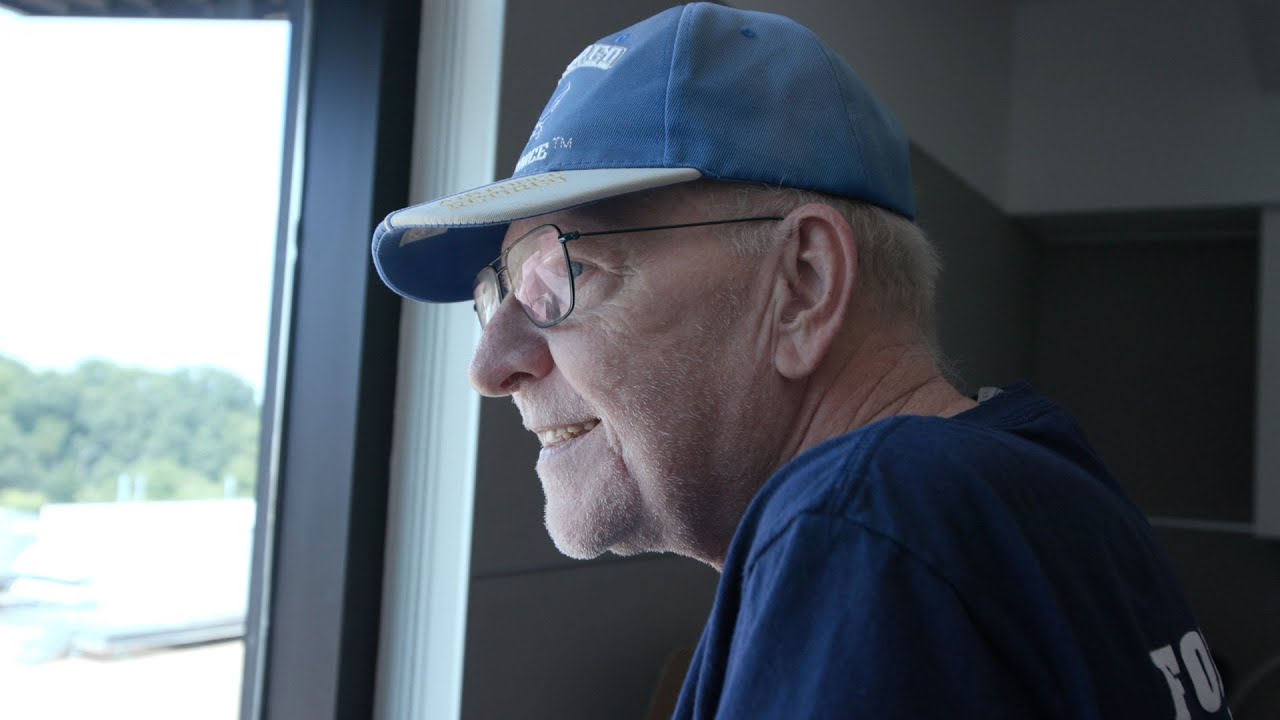
Play the accessible version of the SSH Inova - Roy's Success Story video
U.S. Air Force veteran makes remarkable recovery
Melvin McMillan will always remember January 31 as the day her husband, Roy, died – and June 20 as the day “God started working his miracles.”
Although she acknowledges that in the 140 days between, as Roy spent nearly five months in various hospitals battling pneumonia and influenza and respiratory failure and low oxygen/high carbon dioxide in his blood, the mere fact that he survived is a miracle.
Roy, 67, is a retired civil engineer with the U.S. Air Force. He and his family lived at different bases throughout his career, with his final assignment taking them to Anchorage, Alaska, where Roy was sometimes gone for weeks in remote wilderness locations. The McMillans are a tight, tough family guided by their faith.
Today, they live in rural Snow Hill, North Carolina. A former smoker, Roy has already battled lung cancer and continues to live with chronic obstructive pulmonary disorder and emphysema. Previously, he received oxygen at night although his health conditions didn’t keep him from caring for their three acres of property or volunteering with his local fire department.
The night Roy died
The McMillan family’s nightmare began when Roy was having trouble breathing one day. That evening, the oxygen level in his blood was so low that Roy became unresponsive. Melvin called their daughter, Shauna – a first responder who lives nearby – as well as another medic who lives on their street. Shauna and the neighbor aided Roy until an ambulance arrived and the crew transported him to the nearest hospital. Shortly after arrival, Roy’s heart stopped. He was resuscitated, intubated, connected to a ventilator and moved to a hospital in Raleigh.
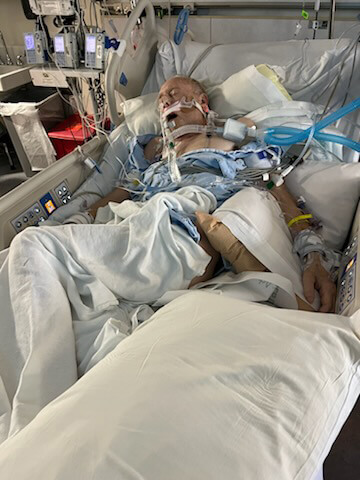
Roy spent five weeks sedated in intensive care battling persistent illnesses. His family faced the excruciating decision of whether to remove his life support or allow physicians to give him a tracheostomy – a slit in his windpipe with a tube that connects to a ventilator. If Roy was to keep fighting, a tracheostomy would be safer longer term than the endotracheal tube he was given at his first hospital.
“That was a really hard decision, but my dad is a fighter. He’s always been a fighter,” Shauna said. Even though their father was critically ill and faced a long recovery, they believed he could do it.
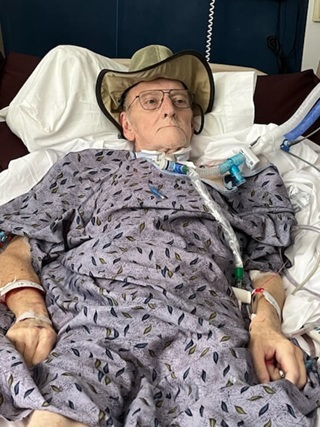
Roy moved to another hospital with hopes of rebuilding strength to breathe on his own again. In 2 ½ months, that never happened. From there Roy went to a skilled nursing facility in Alexandria, Virginia – five hours from his home. It was the closest one that would take a ventilator patient. Roy got sicker and weaker there. He spent most of his days sedated, in bed, connected to a ventilator and feeding tube.
Hope is renewed
Roy’s family says everything changed when he needed to go to a hospital for emergency care. He was taken to Inova Alexandria Hospital and over the next nine days, the care team stabilized him.
June 20 is the day Roy transferred to Inova Specialty Hospital, a critical illness recovery hospital that specializes in caring for patients with complex medical needs. Here, the McMillans’ felt renewed hope.
At admission, Roy couldn’t breathe, eat, talk or walk on his own. In fact, he was so weak from months in bed that he struggled to move on his own. A physician-led, interdisciplinary team collaborated to get Roy home again – without his ventilator.
“Roy was pretty much bedridden at this point,” Melvin said. “His lungs weren’t strong enough for him to sit up.”
From day one, the care team worked to improve Roy’s strength. Respiratory therapists began lowering his ventilator settings or taking Roy off the ventilator for short spurts, closely monitoring how much his lungs could do before he was exhausted. Each day he did more. A speech-language pathologist connected a special valve to Roy’s tracheostomy that allowed him to speak – which also improves diaphragm and lung strength – and the care team helped Roy get out of bed and into a chair.
Roy’s family was more than 200 miles away and while they visited as often as they could, it wasn’t as often as they’d liked. They called when they couldn’t visit. With all Roy had gone through, he dealt with panic attacks and depression.
Hospital staff spent extra time talking with and encouraging him to work hard at recovery.
Regaining his independence
Within four days, Roy was breathing on his own. The ventilator was wheeled from his room.
“One of the things that really got me motivated is that I could tell they wanted to help me,” Roy said. “They listened to me. When I asked them a question or told them something, they listened to me.”
His wife added, “And they weren’t doping him up.”
As an example, Roy pointed toward the night he suggested to a respiratory therapist that maybe he didn’t need to go on the ventilator that night. He was breathing well on his own during the day and being reconnected to the ventilator made him anxious. That night, the therapist monitored Roy’s breathing. Roy slept well and did not need the ventilator – ever again. A few days after that, his tracheostomy tube was removed.
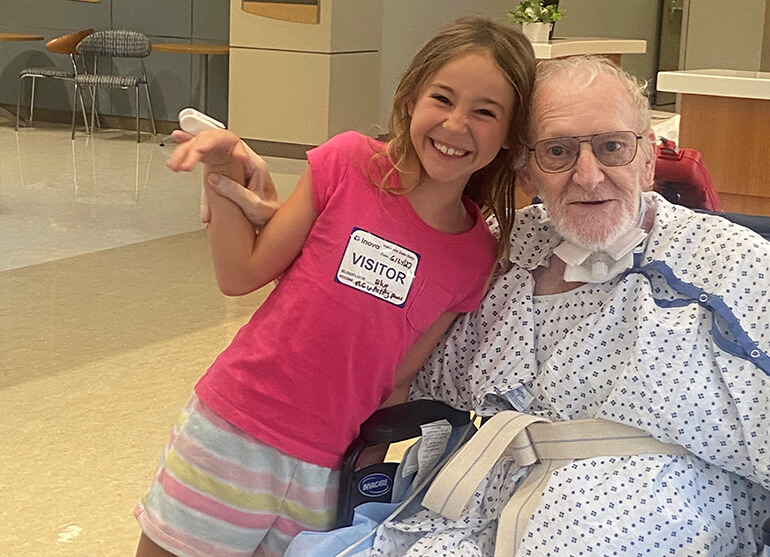
In physical and occupational therapy, Roy gained strength by holding himself upright on the edge of his bed and he progressed to transferring from one location to the other – for example, from his bed to a wheelchair. Therapists moved his limbs to restore range of motion, and soon he was practicing repetitions of sit-to-stand exercises. Then, he took his first steps.
Roy had been using a portable toilet. One day, he asked his care team if they would help him walk to his bathroom. He wanted to walk. He felt ready. Using a walker, and with therapists holding on him, he made his way to the bathroom.
“Being able to get up and move again really helped me stay motivated,” Roy said. “It made me want to go after things and keep increasing what we were doing in rehab.”
Roy also was able to start eating again after he passed a series of tests that demonstrated he could swallow different textures of food without aspirating.
The light at the end of the tunnel
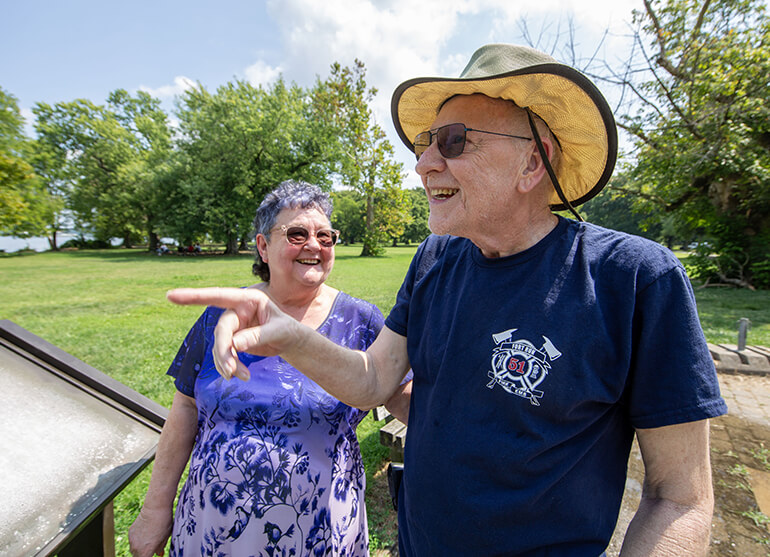
Just 19 days after admission, Inova Specialty Hospital staff lined the hall to cheer for Roy as he walked with his walker shortly before discharging home. And later that day, Roy got a hero’s welcome by his fellow firefighters, who greeted him in a firetruck at the county line and escorted his family to their home.
Shauna called Inova Specialty Hospital “the light at the end of the tunnel... light we hadn’t seen for 140 days.”
“At this point, he’s actually in better shape than he was prior to the day he coded, because on the day that he coded, he was on two liters of oxygen continuously,” she said. “He has not had to have an ounce of oxygen since he left this (hospital).”