Romea's Story
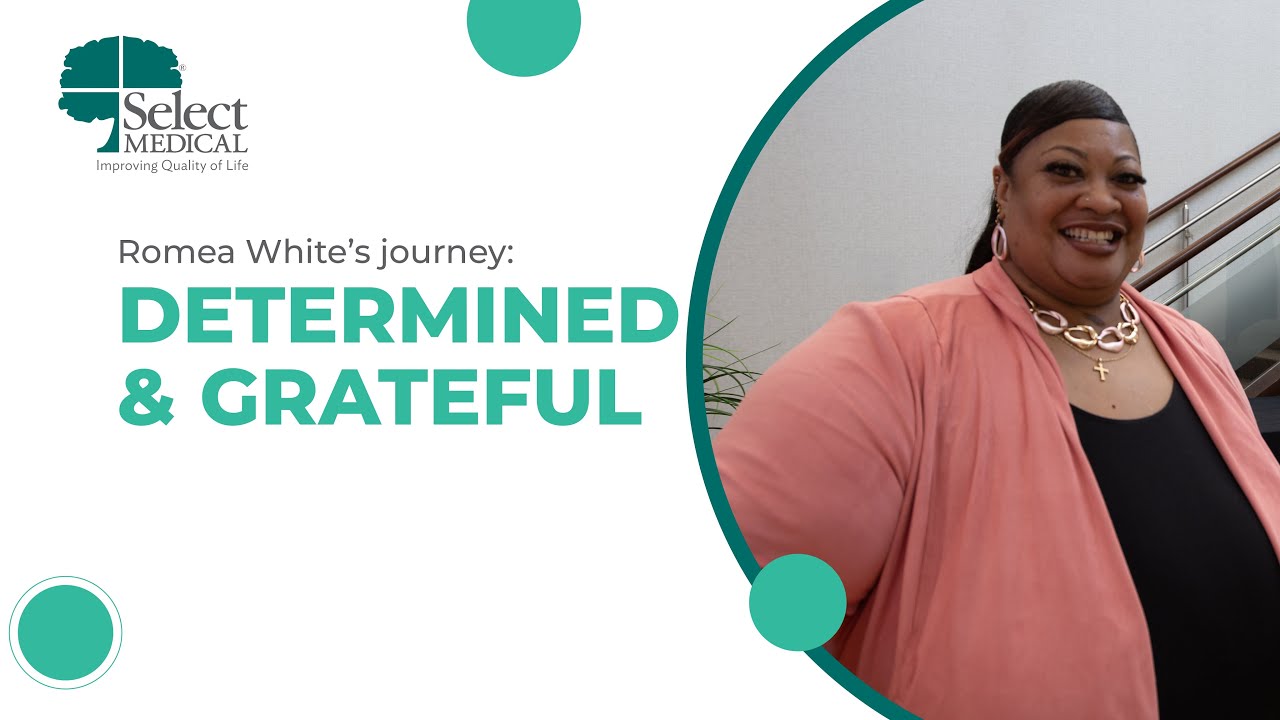
Considering how many times Romea White’s heart gave out, it’s no wonder it overflows with gratitude today.
Gratitude for the medical teams that saved her life; for a family that never gave up hope; and for friends, colleagues, nurses and others who visited, encouraged her, played music, prayed and wiped her tears as she lay in a hospital bed connected to a maze of machines, unsure what her future held.
And, gratitude to God “for always keeping me over the years.”
Romea, 37, was a single mom and assistant bank manager in Aiken, South Carolina, when she felt increasingly short of breath and went to Aiken Regional Medical Center. She was diagnosed with pneumonia and spent the weekend undergoing treatment. When she got home, she struggled for breath again and called 911. An ambulance took her back to the medical center.
Fluid had built around her lungs and heart, leading to cardiac arrest. She was resuscitated six times; once after 18 minutes. Later, Romea learned how her family was cautioned that she might never awaken from her vegetative state.
“It makes me tear up when I think about it, that I’m still here and I can take care of myself and I can go places.”
Three hospitals in three months
 Romea spent 105 days in three hospitals. Today she’s back home enjoying life with her teenage daughter Nyema, back at the job she loves and eager to share her journey to give hope to others facing seemingly insurmountable odds.
Romea has little memory of her return to the medical center or her 34 days connected to a ventilator while physicians pumped her with medication to clear her lung infection and stabilize her heart.
Her family remembers.
Her brother, Raquan Askew, uprooted his life in North Carolina to be by his big sister’s side and to support Nyema. He and their sister, Shaquna, took turns staying with Romea as she lay unconscious, praying, often feeling helpless as they watched nurses check Romea’s oxygen levels and drain fluids.
After a week in an intensive care unit Romea transferred to Select Specialty Hospital – Augusta, a critical illness recovery hospital that specializes in helping patients learn to breathe on their own again. Romea was unable to breathe, eat, walk, talk or think clearly. She still had an endotracheal tube down her throat and was at a high risk for complications so physicians initially kept her sedated to heal.
Ten days later, her care team began lowering her sedation. When Romea was able to follow basic commands such as blink and give a thumbs up, she went to Doctors Hospital of Augusta for surgery. Physicians removed her endotracheal tube and replaced it with a tracheostomy, a slit in her windpipe with a tube that connected to a ventilator.
Four days later, she was back at Select Specialty Hospital and slowly beginning to understand where she was, the gravity of her situation and the hard road that lie ahead.
Learning to eat, talk and walk again
Romea arrived on a Tuesday and the next day, she began participating in exercises to rebuild her strength and stamina. One involved taking her off the ventilator for a few hours and closely monitoring how well she could breathe on her own.
While she was off the ventilator that day, a speech-language pathologist connected a special valve to her tracheostomy that moved air through her vocal cords.
“I was able to speak again. I was so happy,” Romea recalls. A year later, the joy of that moment still radiates in her smile as she talks about that pivotal moment. Her sister, Shaquna, had been with her. They called so many people -- her daughter, mother-in-law, another sister, a cousin, friends.
Raquan remembers that day, too. It was their mother’s birthday.
“I was sitting at Shaquna’s house watching Master Chef – my comfort show - and I received a video call from both of my sisters,” he said. “I heard, ‘hey bro’ and was so excited to see Romea sitting up and able to talk."
Soon thereafter, a therapist brought ice chips, water, apple sauce and crackers to Romea’s room and observed her as she slowly swallowed her first food and drink in more than a month, paving the way for her to gradually begin eating again.
Meanwhile, Romea could balance herself at the edge of her bed but couldn’t raise herself to stand. Her therapy team put her on a tilt table and over the next few weeks, gradually elevated her from a lying toward standing position. Initially she could tolerate a tilt of 20%, then 40%, then 70%.
Therapists daily moved her arms and legs up and down and side to side; Romea’s entire body was stiff and ached from lying in bed for so long. When her therapy sessions ended, her brother took over those movements.
Five weeks after admission, Romea held her therapists’ hands and stood for the first time. She did that three times that day. One week later, she took her first steps with a walker.
“I was really standing, really taking a step,” she said. “Before therapy, I couldn’t do that. My feet hadn’t been on the floor in months.”
Six weeks after admission, Romea was breathing, eating and talking on her own. Her ventilator was gone. Now that she cleared her last hurdle – walking – she was ready to move to inpatient rehabilitation. “They worked me really hard,” she said, and three weeks later, she could walk with a walker and went home to her daughter and brother.
She returned to work two months later, saying, “I might have been walking slow, but I was walking without a walker.”
Eighteen month after her initial hospitalization, “Romea is back like she never left,” Raquan said. “She’s walking, still outspoken, thriving in her workplace as she always has … and I’m happy for her.”
Community Support
“It was a scary experience. When doctors told my family they’d done all they can do, they could have let me go,” Romea said. “Through it all, I felt the prayers and support of everyone around me.”
Select Specialty Hospital credits her positive attitude and determination for her remarkable recovery, saying Romea set high expectations for herself and accomplished them all – and then some. When she wasn’t participating in therapy, they’d find her sitting on her bed with a laptop, keeping up with work or connecting with family and friends.
“I’ve always been a positive person and I was motivated to get home to my daughter,” she said. But the encouragement of her care team also made a difference – even when they may not have realized it.
Romea remembers how, when she was still on the ventilator, sedated and unable to respond, she often heard a reassuring voice. She doesn’t remember what was said, but she knew they were words of encouragement.
When Romea awoke from sedation and a respiratory therapist came in to her room, Romea instantly recognized her voice.
“I asked her if that was her who spoke to me and she said yes, she talked to me every day,” Romea said.