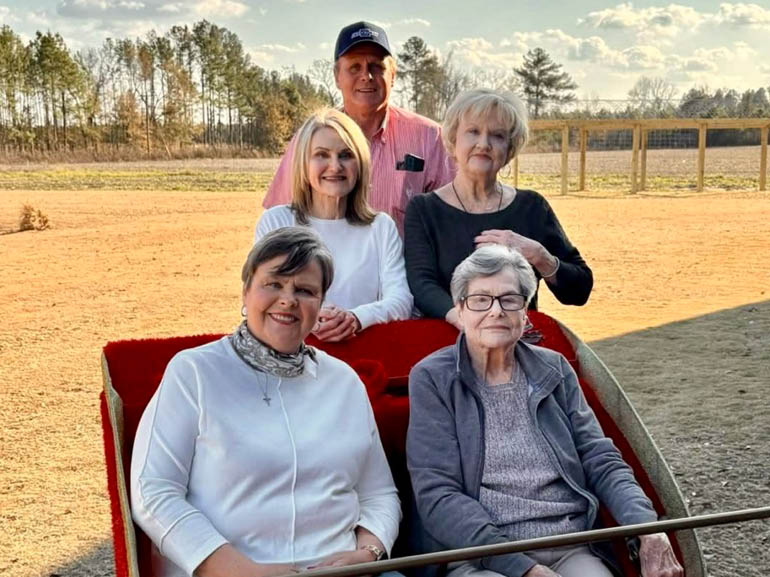
Georgia woman was the picture of health. Then surgical complications left her fighting for every breath.
Before her illness, Jan Hooks lived with a rhythm most people only dream about. Rising early and retiring late, Jan, 60, of Swainsboro, Georgia, ran a thriving farm. She grew vegetables for a local market and her flowers adorned the centerpieces and arches at weddings. Jan’s daily routine included lifting heavy crates, walking her property and managing most tasks alone.
Jan worked hard, ate clean and drank water. “I always had good health,” she said. “I was always youthful.”
She also had a heart for animals; her farm was home to her own three huskies as well as rescue dogs.
Then Jan noticed something she couldn’t explain. She was exhausted by afternoon.
“I started noticing I had to doze for about 30 minutes,” she said. The summer heat felt heavier than usual, and her business was booming. She reasoned it away: Maybe I’m just working too hard. Maybe I’ll bounce back.
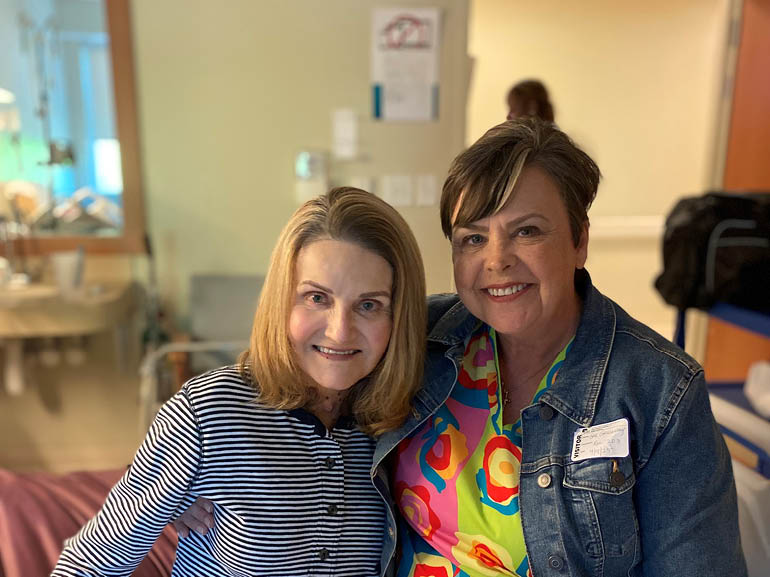
But she didn’t. A fever came next — she thought it was the flu. Then a hospital visit. Testing showed she needed a heart valve replacement. Surgeons told her she was unusually healthy for someone her age, predicting she’d be home within a week.
Instead, her recovery unraveled.
Rapid medical decline
An artery was accidentally injured during the procedure. Jan lost a dangerous amount of blood. Her heart stopped. She was revived. Later, pneumonia developed. Fluid filled her lungs. She was on and off a ventilator, then back on. Then her lungs partially collapsed. She aspirated more than once. During one episode, she was unresponsive for several minutes.
“They said I died four times,” Jan said.
By the time she stabilized, Jan was a fraction of who she’d been. She weighed almost nothing. She couldn’t breathe, talk, eat or walk. She now had a tracheostomy (trach), a hole in her windpipe with a tube that connected to her ventilator.
When doctors recommended a hospital specializing in prolonged ventilator care, her family asked where she would have the best chance at recovery. That led to Select Specialty Hospital – Augusta.
There, a physician-led, multidisciplinary team created a plan tailored to her needs. Nurses offered steady reassurance while therapists focused on daily progress.
Respiratory therapy began immediately. To eventually come off the ventilator, Jan had to complete spontaneous breathing trials — periods where the machine stopped pushing air into her chest and she had to breathe on her own.
The first trials terrified her.
Inside, she thought: What if I can’t? What if the air doesn’t come? “Paranoia,” she called it. “They’d cut the oxygen down and I’d panic.”
Her therapists coached her through: breathe in, breathe out, slowly, deliberately. They were patient, never rushing her. Minutes stretched into longer sessions. Each time she lasted a little longer.
“It was freedom”
And then, after nearly two weeks, there was a shift. Jan felt air moving through her body in a way that felt natural again — fragile but hers. Eventually, staff watched her successfully breathe all day without the machine. Jan no longer needed it.
A few days later, with her breathing stable, she no longer needed the trach, either.
Speech-language pathologists had placed a speaking valve on her trach earlier in her stay — a device that channels air over the vocal cords. Her voice was barely a whisper at first, damaged from earlier treatments.
The moment sound returned — faint, shaky, but real — she felt something inside her unlock.
“When I could talk… it was freedom,” she said. “I just couldn’t believe it.”
Her thoughts shifted from fear to possibility: If I can talk again, maybe I can eat. Maybe I can walk. Maybe I’m coming back.
Swallowing therapy
Early swallowing tests showed she was still aspirating — food and liquid slipping into her airway. FEES testing, which uses a tiny camera to watch the throat swallow, confirmed it. Her speech therapist gave her exercises: strengthen the tongue, close the airway, protect the lungs.
They practiced with ice chips, then thickened liquids. Jan remembered the fear with each swallow. Don’t choke. Don’t fail this time. Please let this work.
Slowly, it did. A repeat swallow exam showed improvement. She started a modified diet, then advanced to regular foods and liquids days later.
“When they started feeding me, it made a world of difference,” she said. Eating restored energy and hope. This feels like living, Jan thought.
Walking again
On her first physical therapy day, she couldn’t transfer to a chair without help. She couldn’t lift her legs. Everything hurt.
“I didn’t want to do it,” she admitted.
Therapists started with the basics, such as leg lifts and extensions. Kathy also practiced sit-to-stand transitions with a gait belt.
Early sessions left her exhausted. But after a few days, she stood with assistance. A few days later, she took small sideways steps. Later, she walked short distances inside her room.
Then came the moment she’ll never forget: walking with a rolling walker down the hallway.
“Walking the first time… it helped me realize I was going to beat this,” she said.
Restoring dignity
Occupational therapy brought her one of the most emotional milestones: washing her hair.
“You’ll never catch me not washing my face. I can be lost in the woods and I’ll wash my face,” she said — yet she had gone weeks unable to do it. Her skin was painful and sensitive, and she feared being touched.
The day, with the help from her therapist, Jan washed her hair, styled it and applied her makeup. “I felt like a new person.”
Her sister, Gail, framed photos of her dogs and placed them where she could see them from bed. Waking up and seeing those familiar faces every day made her feel anchored.
Looking Ahead
After several weeks, Jan left Select Specialty Hospital – Augusta walking with a rolling walker, breathing on her own and eating regular meals. Her voice was soft but steady. She had regained every function she feared she had lost.
She went home to her mother’s house for continued support, grateful for simple moments: opening a window, letting in fresh air, seeing her dogs again. “When I walked in, one of my huskies tried to jump on me,” she said. “The other two just looked at me like, ‘Where have you been?’”
Returning to her vegetable farm is a long term goal. She has slowly resumed growing greens, arranging flowers for small events and easing back into market work. Recovery brings good days and hard days. “I wake up every day and I’m grateful that I’m here,” she said.
Her cardiologist set a practical expectation: regaining most—but not all—of her previous strength would mark a strong recovery. She continues outpatient therapy to work toward that benchmark.
Jan credits God, her family and the team at the hospital for her survival and progress.
“(The Select team) accomplished more in 10 days than others did in three months,” Jan said.
They also made her feel safe at a time when she didn’t, particularly recalling a time when she needed assistance. She pressed the call button. She listened as the nurse said her room number, reminded others that Jan couldn’t yet speak and sent someone to check on her.
Her family wrote a letter to the staff, thanking them for their compassion and focus: “She was so sick when she arrived, and now she is on her way home… We can never express our appreciation.”