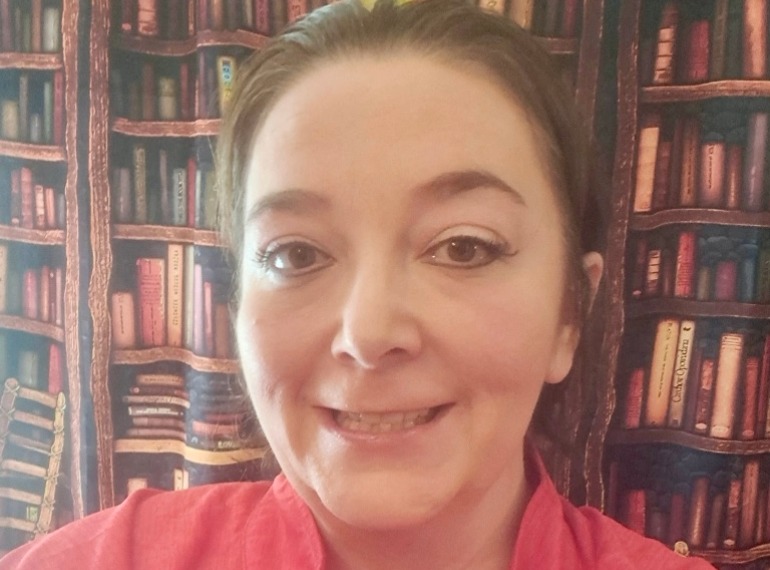
Milwaukee woman relearns to breathe, eat and walk after critical illness

Rose Carpenter, 43, had spent her entire life in Milwaukee, close to her siblings and nephews and rooted in the simple routines she loved – cooking, crafting and settling in with her favorite movies. Independence and family defined her world, until her health took an unexpected and frightening turn.
Rose, who has an enlarged heart, began feeling weak and increasingly short of breath. Concerned, she asked her sister to drive her to a local emergency room where doctors placed her on BiPAP, breathing support delivered through a mask, before sending her home. By the next day, she felt worse. Struggling to breathe and growing weaker, Rose called 911 and returned to the hospital.
Her condition continued to decline. Rose became confused and ultimately required a ventilator to breathe. Her hospitalization was further complicated by internal bleeding, and she later needed a tracheostomy – a small surgical opening in her neck connected to a breathing tube that delivered air directly to her lungs. A feeding tube was also required.
Transition to specialized care
After 28 days, Rose’s condition stabilized, but she faced the long road of recovery. She could not breathe, speak or walk on her own and experienced periods of confusion that made rebuilding even harder. Still, Rose was determined. Along with her sister, Tanya, she made the decision to transfer to Select Specialty Hospital – Milwaukee St. Francis, a critical illness recovery hospital, to focus on healing.
“The hospital’s strong Google reviews gave us confidence that we made the right decision,” Rose said.
Soon after her arrival, a physician led, multidisciplinary team developed a personalized treatment plan centered on restoring Rose’s independence.
“I was simply grateful to be alive,” she said. “My goals were to breathe on my own, regain my strength to walk again, and ultimately return home.”
Breathing on her own again
At first, Rose still relied on a ventilator at night. During the day, she could breathe mostly on her own but required supplemental oxygen and moisture to support her airway. Each day, she participated in breathing trials that gradually increased in length – pushing her lungs to do more of the work. Within a week, she reached a hard won milestone: she no longer needed the ventilator.
Finding her voice marked another powerful turning point. Therapists placed a special valve on her tracheostomy that redirected air through her vocal cords, allowing Rose to speak again while also helping rebuild core strength. In time, she was breathing independently, using only her own BiPAP while sleeping. Eighteen days into her stay, her tracheostomy was removed, which Rose said was one of the most meaningful moments of her recovery.
“I knew then I was moving in the right direction and that getting home was finally within reach,” Rose said.
Nutrition also improved quickly. Rose arrived on an easy chew, thin liquid diet but soon tolerated regular foods, allowing her to return to a regular diet almost immediately.
Walking again
Physical and occupational therapy played a critical role in her progress. When Rose was first admitted, she needed assistance just to stand at the edge of the bed. Her physical therapists focused on muscle strengthening and functional mobility. Within three days, she took her first steps. With continued gait training and balance work, her strength and confidence steadily grew. By discharge, Rose could walk 1,000 feet with supervision using a wheeled walker.
In occupational therapy, Rose worked on daily activities such as dressing, bathing and brushing her teeth. She practiced reaching safely, standing with stability, conserving energy and managing self care. With consistent effort and encouragement, she regained the confidence and strength to complete daily tasks independently or with minimal supervision by discharge.
Ready for home
After 27 days, Rose had achieved her goals and was ready to return home.
“My experience here has been amazing, and the care is truly exceptional,” she said. “I’m breathing independently, moving around and feeling so much stronger than before.”
Rose was quick to credit the team who supported her recovery.
“They helped me every step of the way,” she said. “They pushed me, encouraged me, and never gave up on me – even when things were hard.”
She also expressed deep gratitude for her family.
“My sisters visited me every day,” she said. “Knowing they were there for me gave me the strength and motivation to keep going.”
Before heading home to reunite with family and celebrate with pizza at her favorite restaurant, Rose shared a message for others facing similar challenges.
“Be a fighter and never give up,” she said. “You’re stronger than you think, even on the days it feels impossible.”