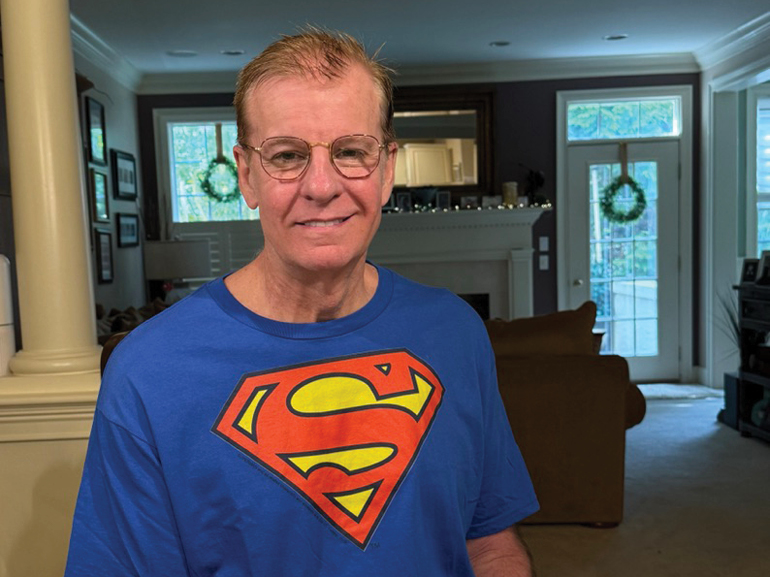
Richard's Story
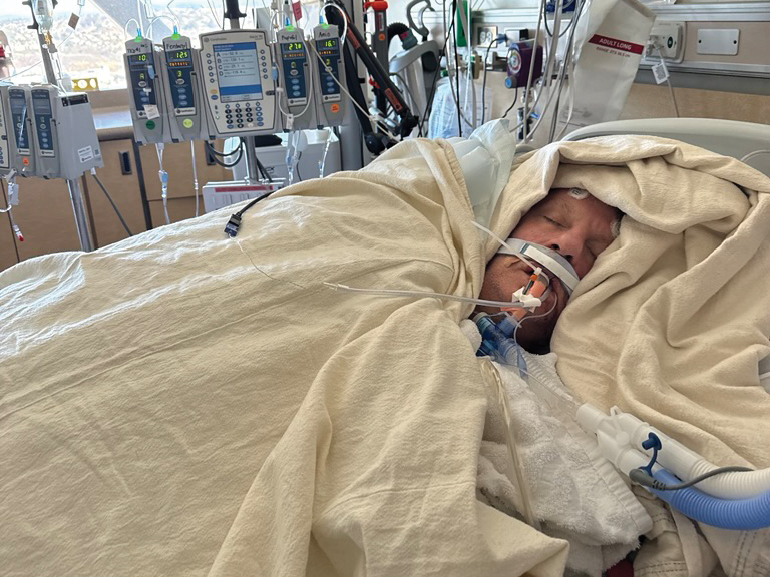
Rich Wenzer's wife awoke to what she thought was the sound of her husband snoring. But when she looked into his face, his color didn't look right.
Then she felt for a pulse -- there was none.
The night before, Rich and Felicia flew from Pennsylvania to San Diego to visit their son on his 21st birthday, and they'd gone to bed with visions of sun-soaked beaches. Now, as Felicia begged for help from whoever was on the other end of 911, their daughter started CPR on her 59-year-old father.
First responders shocked Rich’s heart three times and transported him to UC San Diego Medical Center – Hillcrest. Doctors determined Rich’s sudden cardiac arrest was due to an irregular heart rhythm. They also found his heart muscle was weakened due to a condition called ischemic cardiomyopathy. With his lungs unable to supply enough oxygen on their own, he was connected to a ventilator to help him breathe. A feeding tube provided nutrition.
With his condition deteriorating, Rich’s medical team placed him in an induced coma to give his body time to recover.
“At two different times, by two different doctors, we were told he wasn’t going to make it and to prepare ourselves to say goodbye,” Felicia said. “Or, if he did pull through, he would have severe deficits.”
Yet two weeks later, Rich came out of the coma, though he struggled to stay awake. He eventually was able to come off the ventilator but remained confused and couldn’t walk, talk, eat or move on his own.
Knowing Rich’s best chance for recovery would be at a hospital that specializes in treating medically complex patients, his family toured Select Specialty Hospital – San Diego.
“I liked the physical therapy room at Select, that there was a doctor on staff 24/7 and that I could walk from the Bannister Family House” where she was staying, Felicia explained.
Rich transitioned to Select Specialty Hospital. There, his physician-led multidisciplinary team developed a personalized treatment plan that focused on helping him regain his independence.
“He was awake but not tracking with his eyes and unable to follow commands,” Felicia said. “I think he could hear us because his head would turn toward our voices, but he couldn’t really see us.”
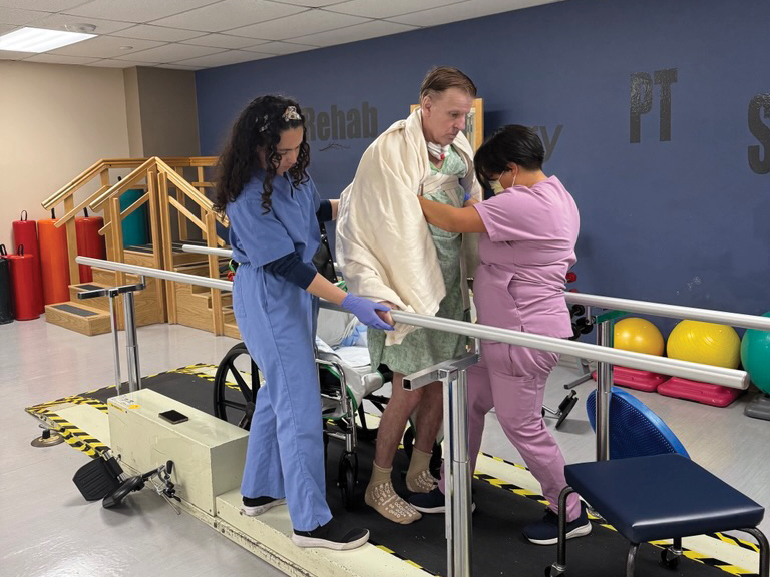
Rich’s physical and occupational therapy teams got to work rebuilding his strength, range of motion and balance. Physical therapy began with simple bed exercises, such as holding himself upright on the edge of the bed while raising and lowering his legs, reaching in different directions for a ball or performing other tasks. Within 10 days, he was standing with the help of a special chair that transitions a patient from sit-to-stand position. Ten days after that, he took his first steps while balancing himself between parallel bars.
One day, in the hospital’s expansive therapy gym, Rich and his physical therapist played a game of dodgeball. His family was thrilled.
“It was really funny and touching to me,” said Felicia, remembering how their laughter drew in everyone walking by to join in the fun. “He had gone from being completely unresponsive to playing dodgeball. It was a wonderful day.”
Occupational therapy concentrated on enhancing Rich’s independence through self-care tasks such as dressing, showering and using the toilet. They also worked to improve his balance, coordination and overall mobility with practical activities, like reaching for cones while standing, a move similar to taking items from a cabinet.
Rich’s daily therapy helped him eat, speak and think clearly again. He played word find games or popped colored pegs into a board to improved his cognition and memory. To strengthen his throat muscles, he practiced swallowing and moving his tongue.
Rich arrived at Select Specialty Hospital with a tracheostomy, a slit in his windpipe with a tube that delivered supplemental oxygen. Each day, as Rich’s strength and stamina improved, his breathing became less labored.
Just 11 days after his arrival, Rich spoke for the first time after his speech-language pathologist attached a speaking valve to his tracheostomy tube, which allowed air to move through his vocal cords for the first time since his cardiac arrest. The valve helps patients talk while also restoring the respiratory system.
Three days after he spoke, Rich achieved two more milestones: his tracheostomy was removed and he ate for the first time. His first few meals were pureed foods and thick liquids but he soon progressed to a regular diet. Once he was able to consume enough calories to sustain his body, his feeding tube was removed.
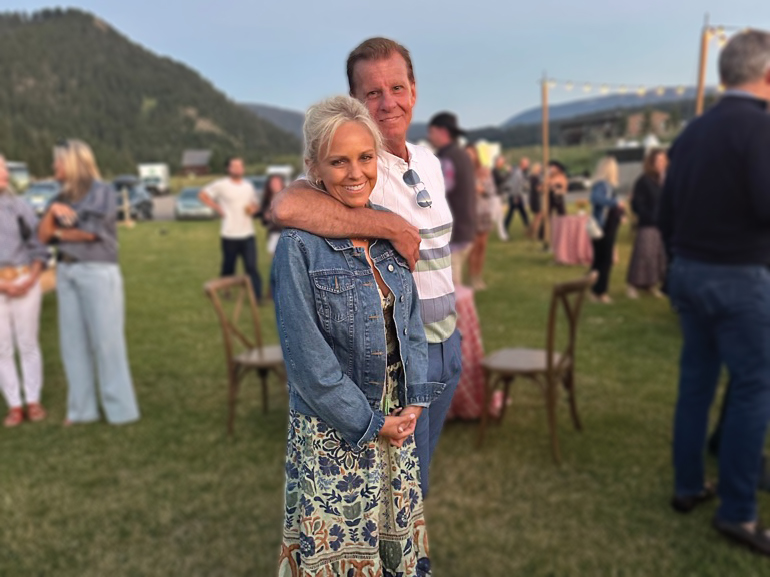
Nearly seven weeks after admission, Rich met his goals to breathe, eat, talk, walk and think clearly again. He discharged but returned to an acute care hospital to receive an implantable cardioverter defibrillator to help manage his heart condition and reduce the risk of future complications before heading back to Pennsylvania.
His doctors at Select Specialty Hospital advocated for the procedure as a critical step to ensure his long-term safety.
“They kept fighting and pushing so he’d get the surgery before we left,” Felicia added. “They made it happen.”
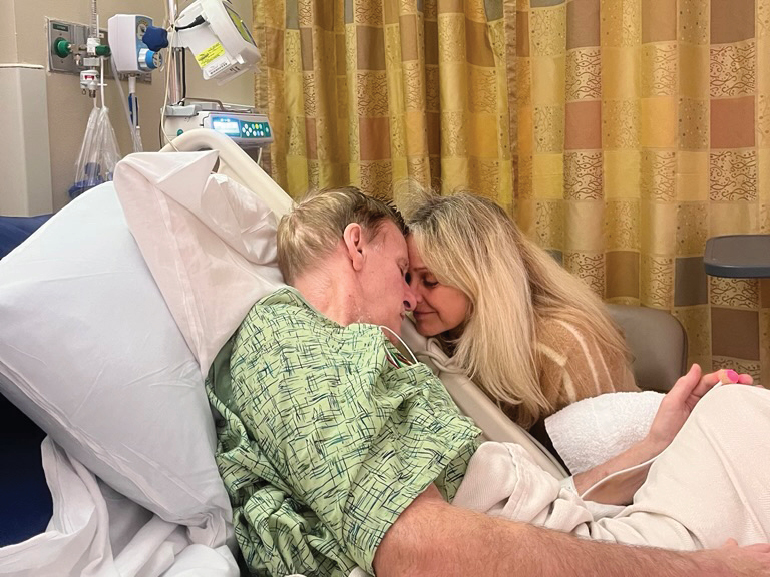
Throughout his stay at Select Specialty Hospital, Rich’s family was a constant source of support.
“I have an increased appreciation for my wife, children and my life,” he said, noting that Felicia was by his side every day.
They both were grateful for his care team as well.
“They were incredible. We cannot say enough,” said Felicia. “We formed this wonderful relationship with them. They were like family.”
Reflecting on what he described as a “great experience,” he offered advice to others on a similar journey.
“Be kind to the staff. Be patient with others,” he said. “Look toward your nurses and doctors for their guidance.”